The ICT Vacuum Block or Volume Imbalance is an important price delivery concept taught by Michael J. Huddleston, founder of the ICT (Inner Circle Trader) methodology. The concept focuses on a gap created when a sudden volatility event causes price to rapidly reprice from one level to another without normal trading occurring between those two price points.
A Vacuum Block may appear after an important economic event, a session opening, an interest rate announcement or another sudden injection of volatility.
Price can rapidly gap higher or lower.
On the chart, there is a visible space between the previous candle and the new candle.
No normal price delivery has occurred through this range.
This absence of trading creates a vacuum of liquidity.
The market may later return towards the range and deliver price through the gap.
This creates the basic idea behind the ICT Vacuum Block or Volume Imbalance.
Michael J. Huddleston explains the concept in the mentorship lesson:
“There’s absolutely no way for any trader to execute. There’s no trade between those two price points.”
The gap therefore becomes an important price range that ICT traders can study for future retracement, rebalancing and trade setups.
What is an ICT Vacuum Block?
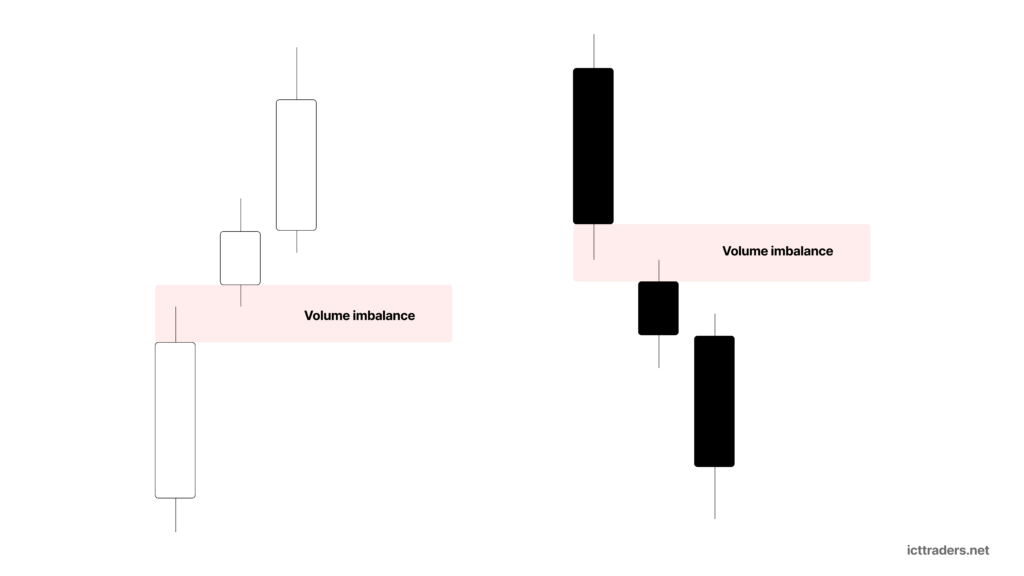
An ICT Vacuum Block is a gap in price action created by a sudden volatility event.
Price rapidly moves from one price level to another.
There is no normal trading between the previous candle’s closing price and the opening price of the next candle.
The range between these two points creates a vacuum of liquidity.
ICT traders frame this gap as a price block.
Even though there is no normal candle inside the gap, the range still has defined price parameters.
It has a high.
It has a low.
It can also be divided into a mean threshold or 50% level.
The ICT methodology therefore treats the Vacuum Block similarly to a price range or candle.
The market can later retrace into the gap and partially or completely fill the range.
What is Volume Imbalance in ICT?
A Volume Imbalance represents an area where price delivery occurred primarily in one direction and normal two-sided trading was limited or absent.
The term is often used by traders when discussing inefficient price delivery.
In the Vacuum Block lesson, the main focus is a true gap where no trades were made between the previous price and the newly repriced market.
For example, suppose a market is trading at one price immediately before an economic news release.
The news is released.
Price immediately opens or reprices 30, 50 or 60 pips higher.
There may be no executed trading throughout the complete distance between those two price levels.
That absence creates the vacuum.
The market has moved through the price range without normal delivery.
The gap therefore represents an imbalance in price delivery.
Within the context of this ICT lesson, the ICT Vacuum Block or Volume Imbalance can be studied as an inefficient price range that may attract future price delivery.

Why Does an ICT Vacuum Block Form?
An ICT Vacuum Block forms because of sudden volatility.
A major event can rapidly change market pricing.
The market may immediately adjust to new information.
This rapid repricing creates a gap.
Events that may create this type of price action include:
- Non-Farm Payroll
- FOMC-related events
- Interest rate decisions
- Major economic releases
- Unexpected geopolitical events
- Futures session openings
- Stock session gaps
Consider Non-Farm Payroll.
Price is trading normally before the economic release.
The data becomes available.
The market rapidly reprices.
The next available price may be significantly higher or lower.
During this movement, there may be no trades between the old price and new price.
The result is a vacuum of liquidity.
Michael J. Huddleston explains:
“What it does, it creates a vacuum of liquidity.”
This liquidity vacuum creates the ICT Vacuum Block.
The Main Idea Behind ICT Vacuum Block
The main idea behind the ICT Vacuum Block is that the market has not efficiently delivered price through the gap.
Suppose price gaps higher.
The previous candle closes at a lower price.
The next candle begins trading significantly higher.
There is a space between the previous close and the new price.
No transactions occurred inside this space.
Price has simply repriced above the range.
ICT traders then ask an important question.
Will price continue moving higher and leave the gap open?
Or will price retrace lower and deliver through the empty price range?
In many conditions, the market may return to the gap.
It may partially fill the range.
It may trade to the mean threshold.
It may reach an Order Block inside or around the gap.
Or it may completely close the Vacuum Block.
The trader studies the broader market narrative to determine which scenario is more probable.
How to Frame an ICT Vacuum Block
The Vacuum Block should be treated as a defined price range.
Suppose price gaps higher.
Identify the two price points that create the gap.
The first reference is the close of the candle immediately before the gap.
The second reference is the opening or beginning price of the candle after the gap.
The space between these two points creates the Vacuum Block.
Mark the high of the gap.
Mark the low of the gap.
Now visualize the complete range as if it were a candle or bar.
The range can be divided in half.
The midpoint is the mean threshold.
This allows the trader to study the Vacuum Block using similar principles applied to other ICT price ranges.
As Michael J. Huddleston explains:
“We’re just going to treat it just like any other candle.”
The difference is that there was no actual candle trading through the range when the gap formed.
The block is a visual representation of absent price delivery.
Mean Threshold of ICT Vacuum Block
The mean threshold is the 50% level of the Vacuum Block.
To find it, identify the high and low of the gap.
Find the midpoint of the complete gap range.
This midpoint becomes the mean threshold.
The mean threshold can provide an important reference when price returns to the Vacuum Block.
Suppose price gaps higher and the market narrative remains bullish.
Price begins retracing lower.
The market may trade partially into the Vacuum Block.
It may reach the mean threshold and respond higher.
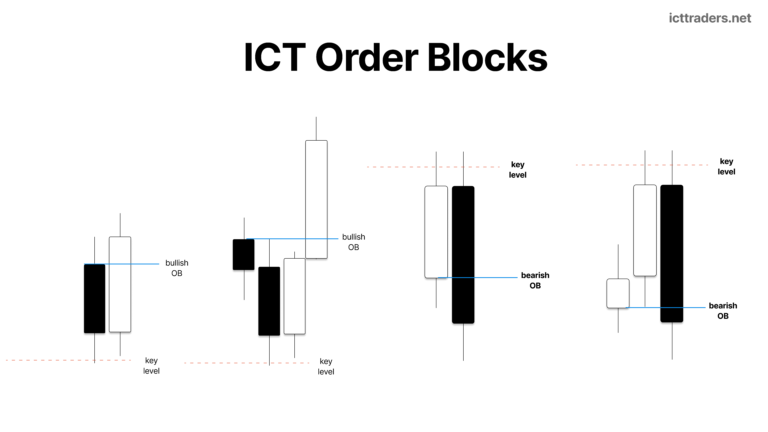
However, ICT also studies Order Blocks around the gap.
A bullish Order Block may prevent price from completely filling the Vacuum Block.
The market may respond from the Order Block and leave part of the gap open.
Therefore, the mean threshold is one reference.
It should not be viewed independently from the surrounding price structure.
Bullish ICT Vacuum Block
A Bullish ICT Vacuum Block forms when price gaps higher because of a volatility event.
The market rapidly reprices from a lower price to a higher price.
No normal trading occurs inside the gap.
The bullish Vacuum Block is defined by the range between the previous candle close and the higher price where new trading begins.
For the bullish setup to have stronger context, ICT discusses conditions where price is expected to move higher.
The market may have been in a downward correction within a larger bullish environment.
Price may be trading in discount.
The market may also have a higher liquidity objective.
A news event creates the gap higher.
The trader now studies whether price will retrace into the gap before continuing towards higher prices.
Bullish ICT Vacuum Block Formation
The basic bullish formation is:
Bullish Market Context → Price in Discount or Correction → Volatility Event → Gap Higher → Vacuum of Liquidity Forms → Price Retraces → Gap Partially or Fully Rebalanced → Bullish Response → Price Continues Higher
The gap itself does not automatically mean price must continue higher.
The trader must study the context.
An exhaustion gap can also form after a prolonged uptrend.
Therefore, the market narrative is important.
If price is expected to seek higher liquidity and the gap occurs from a discount area, the bullish Vacuum Block can become useful.
The trader then studies the retracement into the gap.
How to Identify a Bullish ICT Vacuum Block
First, determine the broader market direction.
Look for a bullish market narrative.
Price may be in discount or completing a downward correction.
There should be a logical reason for higher prices.
Now observe a sudden volatility event.
Price gaps higher.
Identify the previous candle’s close.
Identify the price where the new candle begins trading.
The range between these two levels is the Bullish Vacuum Block.
Mark the entire gap.
Calculate the mean threshold.
Now observe the retracement.
Look for a Bullish Order Block near or inside the gap.
Price may react from the Order Block before completely closing the vacuum.
If no Order Block prevents the retracement and market timing supports further price delivery, the gap may completely fill.
After price rebalances the Vacuum Block, look for bullish movement through the gap.
Bullish Order Block Inside a Vacuum Block
A Bullish Order Block can prevent the complete closure of a Bullish Vacuum Block.
Suppose price gaps higher.
The market later retraces lower.
Immediately before the gap, there may be one or several down-close candles.
These candles can form a Bullish Order Block.
As price trades lower into the Vacuum Block, it reaches the Bullish Order Block.
The Order Block may provide support.
Price can respond higher from this area.
In this condition, the complete gap is not filled.
A smaller portion of the Vacuum Block remains open.
According to the ICT lesson, this remaining open range may later be classified as a Fair Value Gap.
The trader can continue to monitor this unfilled area for future price delivery.
When Does a Bullish Vacuum Block Fully Fill?
A Bullish Vacuum Block is completely filled when price trades down through the entire gap range.
Price reaches the price level associated with the previous candle before the gap.
The complete vacuum has now received downside price delivery.
ICT describes this as complete closure of the gap.
Michael J. Huddleston explains:
“This whole range here is 100 percent filled. This is in effect perfect delivery of price.”
The market has now delivered price through the previously empty range.
The vacuum of liquidity has been balanced.
If the broader market narrative remains bullish, price can now respond higher.
The trader may look for price to aggressively move back through the Vacuum Block.
Perfect Delivery of Price in a Vacuum Block
Perfect delivery occurs when the market delivers through the Vacuum Block in both directions.
Consider a bullish Vacuum Block.
Price first gaps higher.
The initial gap creates an absence of trading.
Later, price trades lower through the gap.
The Vacuum Block becomes completely filled.
Price has now delivered to the downside through the range.
The market then rallies.
Price trades bullishly through the same range.
Now price has delivered in both directions.
The previously imbalanced gap has been balanced.
In the ICT framework, there may be less reason for price to return below the price level that completely closed the gap.
The market has already delivered price efficiently through the range.
If the bullish narrative remains valid, price should continue towards higher objectives.
Bearish ICT Vacuum Block
A Bearish ICT Vacuum Block is the reverse formation.
Price rapidly gaps lower.
A volatility event causes the market to reprice from a higher price to a significantly lower price.
No normal trades occur throughout the gap.
The range between the previous candle close and the lower opening price creates the Bearish Vacuum Block.
In a bearish market narrative, the trader may expect price to later retrace higher.
The market can enter the Vacuum Block.
A Bearish Order Block may prevent complete gap closure.
Or price may completely fill the gap.
After price delivers through the vacuum, the trader looks for bearish price movement lower.
The same principles used for a bullish Vacuum Block are applied in reverse.
Bearish ICT Vacuum Block Formation
The basic bearish formation is:
Bearish Market Context → Price in Premium or Bullish Correction → Volatility Event → Gap Lower → Vacuum of Liquidity Forms → Price Retraces Higher → Gap Partially or Fully Rebalanced → Bearish Response → Price Continues Lower
First, price gaps lower.
The gap creates an inefficient price range.
Price later trades higher.
The market re-enters the Vacuum Block.
A Bearish Order Block may cause price to respond before completely filling the gap.
If the gap completely closes, the market has delivered upward through the entire vacuum.
The trader then looks for bearish price delivery lower.
How to Identify a Bearish ICT Vacuum Block
First, determine whether the market narrative supports lower prices.
Price may be trading in premium.
The market may have an unsatisfied sell-side liquidity objective.
Now wait for a sudden volatility event.
Price gaps lower.
Mark the close of the candle before the gap.
Mark the lower price where new trading begins.
The distance between these price levels becomes the Bearish Vacuum Block.
Find the mean threshold.
Study the surrounding bearish Order Blocks.
Wait for price to retrace higher into the gap.
Observe whether price responds from a Bearish Order Block or continues towards complete gap closure.
After the Vacuum Block is rebalanced, look for bearish price responsiveness.
The expectation is for price to continue towards lower objectives when the broader narrative remains bearish.
ICT Vacuum Block and Time of Day
Time of day can influence whether a Vacuum Block completely fills.
This is an important part of the ICT mentorship explanation.
Suppose a bullish gap forms early in the New York trading session.
There may be several hours of trading remaining.
The market has enough time to retrace and deliver through the gap.
In this condition, a complete gap closure may be more probable.
For example, an 8:30 economic news event may create a large gap.
The New York session still has significant trading time remaining.
Price may retrace into the Vacuum Block and completely fill it.
However, suppose the gap forms later in the trading day.
Price may not have enough time to completely rebalance the range during the same session.
A portion of the gap can remain open.
That remaining imbalance can become important during a later trading session.
Therefore, traders should not assume that every Vacuum Block must immediately fill.
Market timing is important.
ICT Vacuum Block and 8:30 New York News
The mentorship lesson specifically discusses volatility around 8:30 New York time.
Major economic data frequently releases around this period.
An important release can rapidly reprice the market.
A large gap may form.
Because the volatility event occurs relatively early in the New York session, there is still substantial trading time remaining.
The market may have enough time to return into the Vacuum Block.
Price can partially or completely close the gap.
ICT traders therefore study the gap, nearby Order Blocks and the broader directional narrative.
The 8:30 volatility event itself is not a buy or sell signal.
The price delivery after the gap is important.
ICT Vacuum Block and Late New York Gaps
A gap that forms later in the New York session may behave differently.
Suppose a volatility event occurs around 10:00 or 11:00 New York time.
The market may create a Vacuum Block.
There is less trading time remaining compared with an 8:30 event.
The gap may remain partially open during the same trading day.
Price can respond from an Order Block before completely closing the Vacuum Block.
The remaining open portion can become a Fair Value Gap.
The trader may monitor the imbalance for a later return.
The important idea is not to mechanically expect immediate complete gap closure.
The time of day and surrounding price structure should be considered.
ICT Vacuum Block and Fair Value Gap
An ICT Vacuum Block and an ICT Fair Value Gap are related through inefficient price delivery, but they are not exactly the same formation.
A Vacuum Block forms from a true gap.
There is an absence of trades between two price points.
The market rapidly reprices from one price level to another.
A Fair Value Gap normally forms within a three-candle price sequence where one-sided displacement creates an imbalance between candles.
Price still moves through the area, but opposing price delivery is limited.
In a Vacuum Block, there may be no transactions in the gap at all.
A Vacuum Block may later partially fill.
Suppose a Bullish Order Block causes price to react before the entire gap closes.
The small remaining open portion can be treated as a Fair Value Gap for future price delivery.
This relationship is important when studying ICT inefficiencies.
ICT Vacuum Block or Volume Imbalance vs Fair Value Gap
The biggest difference is the original price delivery.
In an ICT Vacuum Block, price gaps between two levels.
No trading occurs through the gap.
In a Fair Value Gap, price aggressively moves through a range.
The imbalance appears because price delivery is primarily one-sided.
A Vacuum Block is therefore a more literal vacuum of traded price.
A Fair Value Gap is an inefficiency created during displacement.
Both areas can attract later price retracement.
Both can be studied as areas of price rebalancing.
However, the formation process is different.
Traders should correctly identify which price phenomenon has occurred before applying the appropriate ICT concept.
ICT Vacuum Block and Breakaway Gap
In the mentorship lesson, Michael J. Huddleston summarizes the Vacuum Block concept as a breakaway gap.
He states:
“A vacuum block is nothing more than a breakaway gap.”
The important ICT interpretation is the liquidity vacuum created by the gap.
Price has rapidly moved away from one range.
The gap shows strong repricing.
If the market remains bullish and price does not completely fill a bullish gap, the open range may show bullish willingness.
The same applies in reverse for bearish price action.
A gap that remains open can show strength in the directional move.
However, broader context remains important because gaps can also appear near trend exhaustion.
Can Every ICT Vacuum Block Fill Completely?
No.
One of the most important lessons in the ICT is that not every gap completely fills.
Price may return to the Vacuum Block.
A Bullish or Bearish Order Block can interrupt the retracement.
The market may respond from the Order Block and leave part of the gap open.
Time of day may also affect gap closure.
A late-session gap can remain open because there is less time for the market to deliver back through the range.
Market direction is also important.
A strong directional market can leave a gap partially open.
The remaining imbalance may provide evidence of price willingness to continue.
Therefore, traders should not blindly trade every Vacuum Block expecting 100% closure.
How to Trade a Bullish ICT Vacuum Block
First, determine whether the market narrative is bullish.
Price should have a logical reason to seek higher levels.
The market may be in discount or completing a downward correction.
Wait for a volatility event to create a gap higher.
Mark the Bullish Vacuum Block.
Identify the gap high and gap low.
Mark the mean threshold.
Study the down-close candles before the gap.
Determine whether a Bullish Order Block exists.
Now wait for price to retrace lower.
If price reaches the Bullish Order Block and immediately responds higher, the Order Block may prevent complete gap closure.
The trader can study the bullish reaction for a potential long setup.
If price trades through the Order Block, a complete Vacuum Block fill may become more probable.
Wait for price to close the entire gap.
Observe the bullish response.
The market should trade back higher through the Vacuum Block.
A strong movement above the gap-opening high can support continued bullish price delivery.
How to Trade a Bearish ICT Vacuum Block
First, determine whether the broader price narrative supports lower prices.
Price may be in premium or moving towards sell-side liquidity.
Wait for a volatility event to create a gap lower.
Mark the Bearish Vacuum Block.
Identify the high and low of the gap.
Mark the mean threshold.
Study nearby up-close candles for a Bearish Order Block.
Wait for price to retrace higher.
Price may react from the Bearish Order Block and leave part of the gap open.
A bearish response can provide a potential short setup.
If price continues higher, the market may completely fill the Vacuum Block.
After complete gap closure, observe whether price responds lower.
The market should show bearish willingness and continue towards lower price objectives.
ICT Vacuum Block as a Trade Entry
The Vacuum Block itself is a range of interest.
A trader should not automatically enter at the first touch.
The surrounding market structure should be considered.
For a bullish setup, a Bullish Order Block inside or near the Vacuum Block may provide a more precise entry area.
Complete gap closure can provide another reference.
For a bearish setup, a Bearish Order Block may interrupt the upside retracement into the Vacuum Block.
The mean threshold can also provide a price reference.
The trader should look for immediate price feedback.
The entry should match the broader market direction.
The main goal is to use the Vacuum Block as part of the complete ICT price narrative.
ICT Vacuum Block and Risk Management
Vacuum Blocks can form during highly volatile market conditions.
This makes risk management very important.
Economic news events can create rapid price movements.
Spreads may increase.
Price can move quickly through several levels.
A trader should define the price range before entering.
Identify the Order Block used for the setup.
Determine the invalidation level.
In the bullish example discussed in the mentorship, the risk can be defined between the bullish entry reference and the lower down-candle area.
When the Vacuum Block has completely filled and price responds higher, ICT expects the level responsible for closing the gap to remain protected.
If price later trades back below the important reference after the gap has already been balanced, the bullish trade idea becomes questionable.
The same logic applies in reverse for bearish conditions.
When Does an ICT Vacuum Block Setup Fail?
A bullish Vacuum Block setup becomes questionable when price completely closes the gap, rallies higher and then returns below the important gap-closing reference.
The Vacuum Block has already been balanced.
Price has already delivered to the downside and then moved higher.
There should be less reason for price to return deeply below the range.
A return into the area may indicate that the bullish narrative is incorrect.
For a bearish setup, price may completely fill the gap higher and then move lower.
If price later aggressively returns above the important gap reference, the bearish narrative becomes weaker.
The price response provides information.
A Vacuum Block should not be treated as a guaranteed support or resistance level.
The market must behave according to the expected narrative.
Common Mistakes When Trading ICT Vacuum Block or Volume Imbalance
One common mistake is assuming every gap must completely fill.
The ICT lesson clearly explains that not all gaps fill completely.
Another mistake is ignoring nearby Order Blocks.
A Bullish Order Block may stop a retracement before a bullish Vacuum Block closes.
A Bearish Order Block can prevent full closure of a bearish gap.
Traders also ignore the time of day.
An early-session gap and late-session gap may have different probabilities of same-day rebalancing.
Another mistake is treating every visible space as the same price concept.
A Vacuum Block, Fair Value Gap and general Volume Imbalance can have different formation characteristics.
Traders may also trade directly against the broader market narrative.
A bullish Vacuum Block should be studied within a bullish context.
A bearish Vacuum Block should support a bearish price narrative.
Another mistake is remaining in a trade when price returns through a range that should already have been efficiently delivered.
When the market invalidates the expected price behavior, traders should respect the information.
Simple ICT Vacuum Block Checklist
Before trading an ICT Vacuum Block or Volume Imbalance, check the following:
Volatility Event: Did a news release, session opening or sudden event create rapid repricing?
True Gap: Is there an actual gap between two traded price levels?
Vacuum Range: Have you marked the high and low of the gap?
Mean Threshold: Have you identified the 50% level of the Vacuum Block?
Market Narrative: Is the broader direction bullish or bearish?
Discount or Premium: Is the gap forming from a logical price location?
Order Block: Is there a Bullish or Bearish Order Block that can interrupt the gap fill?
Time of Day: Did the gap form early enough for further session price delivery?
Partial or Full Fill: Is price expected to partially rebalance or completely close the gap?
Price Response: Does price show immediate directional willingness after interacting with the Vacuum Block?
These conditions help traders understand the gap as part of ICT price delivery rather than simply assuming every gap must close.
Final Understanding of ICT Vacuum Block or Volume Imbalance
The ICT Vacuum Block or Volume Imbalance is a price delivery concept taught by Michael J. Huddleston, founder of the ICT (Inner Circle Trader) methodology.
A Vacuum Block forms when a volatility event rapidly moves price from one level to another.
There are no normal trades between the two price points.
This creates a vacuum of liquidity.
The trader frames the gap as a price range.
The range has a high.
It has a low.
It also has a mean threshold.
Price may later return to the Vacuum Block.
A nearby Order Block may cause a reaction before the gap completely closes.
In this condition, a portion of the gap remains open and may later provide a Fair Value Gap reference.
The market can also completely fill the Vacuum Block.
When the entire gap is closed, the previously empty price range has received price delivery.
If price then moves through the range in the opposite direction, the Vacuum Block has been balanced through both sides of price delivery.
The trader then looks for continuation towards the expected liquidity objective.
The important lesson is not to assume every gap must fill immediately.
Study the market narrative.
Study the price location.
Look for nearby Order Blocks.
Consider the time of day.
Determine whether the Vacuum Block is partially filled or completely balanced.
Then observe the price response.
This is the core logic behind the ICT Vacuum Block or Volume Imbalance concept within Michael J. Huddleston’s ICT trading methodology.