The ICT 20 Pips Per Day Concept is an intraday scalping framework taught by Michael J. Huddleston, the founder of ICT (Inner Circle Trader). This concept is covered in the 2017 ICT Private Mentorship Core Content Month 09 as part of the ICT Amplified Day Trading and Scalping teachings.
The objective is to identify controlled intraday opportunities where approximately 20 pips may be available from a short-term liquidity raid.
However, the concept does not suggest that traders will make 20 pips every trading day.
Michael J. Huddleston clearly states:
“You will not make 20 pips every day, period.”
The 20-pip objective is a practical profit target, not a guaranteed daily income target.
What Is the ICT 20 Pips Per Day Concept?
The ICT 20 Pips Per Day Concept focuses on capturing a relatively small portion of an intraday price movement.
Instead of attempting to catch the entire daily range, the trader looks for a high-probability setup and aims to secure approximately 20 pips.
The concept is based on:
- Short-term liquidity raids
- Five-minute swing highs and lows
- Asian session consolidation
- London and New York session expansion
- Fair value gaps
- Order blocks
- Average daily range
- Turtle Soup entries
The objective is not to predict every market movement.
The trader waits for price to take liquidity above or below a short-term level and then trades the expected reaction.
Twenty Pips Is a Target, Not a Promise
Every trading day is different.
Some days provide large directional movements, while other days remain slow, choppy or range-bound.
There may also be days when no valid setup is available.
Michael J. Huddleston explains:
“One day may have a lot more opportunity than another day. Other days may not have any opportunity at all.”
Therefore, traders should not force a trade simply because they have established a daily 20-pip goal.
The market must first provide the correct conditions.
Banking Partial Profits at 20 Pips
When a trade moves into profit, one practical approach is to secure part of the position after a 20-pip move.
This does not mean the entire trade must always be closed.
A trader may:
- Close the full position at 20 pips
- Take partial profit at 20 pips
- Move the stop to reduce risk
- Hold the remaining position toward a larger objective
Michael J. Huddleston explains:
“Every trade that you get into, if you have profits, at least take something off at 20 pips.”
This helps the trader convert an open profit into a realized profit while still allowing participation in a larger move.
Market Profiling Comes First
The 20-pip target should not be traded without understanding the current market environment.
The trader should determine whether price is:
- Consolidating
- Expanding
- Reversing
- Retracing
- Accumulating liquidity
- Moving toward a higher-timeframe objective
The same setup may behave differently depending on the current market profile.
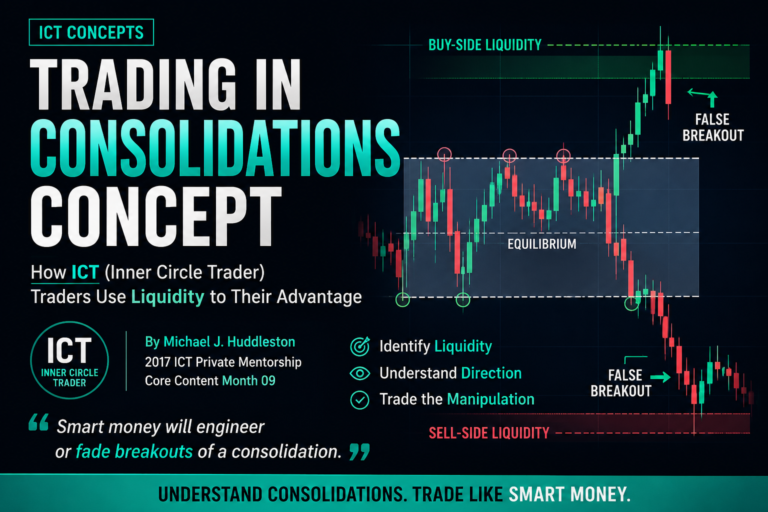
For example, a liquidity raid during consolidation may create a short-term reversal.
A similar liquidity raid during expansion may only produce a brief retracement before continuation.
Understanding the market profile helps the trader select the correct setup.
Two Methods for Targeting 20 Pips
The ICT 20 Pips Per Day Concept presents two primary methods:
- Trading late New York liquidity during the Asian session
- Trading New York expansion after the London session establishes the probable daily high or low
Both methods use a five-minute chart and focus on short-term liquidity.
Method One: Trading Late New York Stops During the Asian Session
The first method looks for short-term highs or lows formed during the late New York session.
These levels may contain small pools of resting liquidity.
During the early Asian session, price may raid one of these levels before moving in the opposite direction.
This approach is particularly suitable for:
- Japanese yen pairs
- Australian dollar pairs
- New Zealand dollar pairs
- Related currency crosses
The setup is generally considered between approximately 20:00 and 00:00 New York time.
Asian Session Buy Setup
For a bullish setup, the trader identifies a short-term low formed during the late New York session.
During the Asian session, price trades below this low and takes the sell-side liquidity resting beneath it.
The trader then looks for a bullish reaction.
The basic conditions include:
- A visible five-minute short-term low
- Sell stops resting below the low
- Price trading below the low during the Asian session
- A quick rejection of the liquidity raid
- A logical discount PD array supporting the entry
- Approximately 20 pips of available upside
This is similar to an ICT Turtle Soup long setup.
The break below the low encourages breakout traders to sell while also removing the stop losses of existing long positions.
If the market rejects the lower price, a long entry may become available.
Asian Session Sell Setup
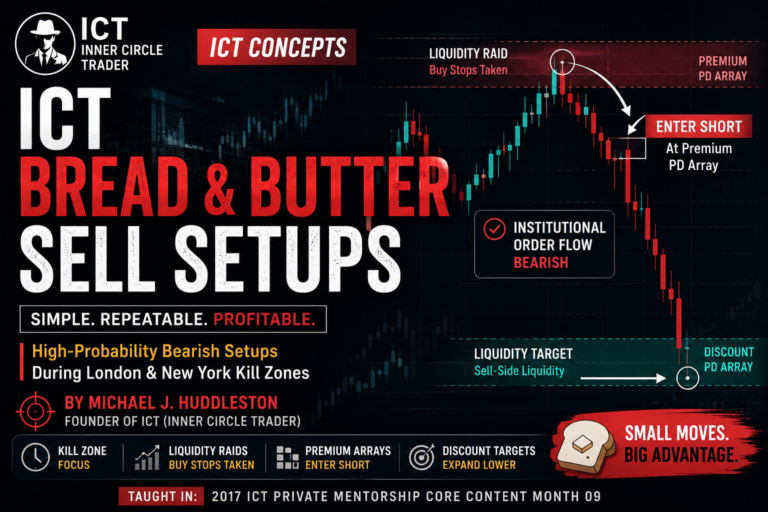
For a bearish setup, the trader identifies a short-term high formed during the late New York session.
During the Asian session, price trades above this high and raids the buy-side liquidity.
The trader then looks for a bearish reaction.
The basic conditions include:
- A visible five-minute short-term high
- Buy stops resting above the high
- Price trading above the high during the Asian session
- A quick rejection from the higher price
- A logical premium PD array supporting the entry
- Approximately 20 pips of available downside
This resembles an ICT Turtle Soup short setup.
The movement above the short-term high may help establish the Asian range high before price trades lower into the consolidation.
Why the Asian Session Setup Can Work
The Asian session frequently develops a consolidating price range.
When price raids a late New York high or low near the beginning of the session, the raid may help establish one side of the Asian range.
For example, price may:
- Trade above a late New York high
- Trigger buy stops
- Establish the Asian range high
- Reverse lower through the developing range
The opposite may occur below a late New York low.
Because the objective is only 20 pips, the trader does not need the market to produce a major directional expansion.
A moderate rotation within the Asian range may be sufficient.
Entry and Risk for the Asian Session Setup
The trader uses a five-minute chart to identify the liquidity raid and entry.
Michael J. Huddleston suggests that an entry approximately five pips beyond the short-term high or low may provide a practical reference.
For a short trade:
- Identify the short-term high
- Allow price to trade above it
- Look for an entry near five pips above the high
- Use a fixed 20-pip stop
- Use a fixed 20-pip profit target
For a long trade:
- Identify the short-term low
- Allow price to trade below it
- Look for an entry near five pips below the low
- Use a fixed 20-pip stop
- Use a fixed 20-pip profit target
The setup uses a direct one-to-one risk-to-reward model.
If the desired entry is not available, the trade should be missed rather than chased.
Using PD Arrays With the Asian Setup
A liquidity raid alone is not always enough.
The setup becomes stronger when the raid reaches a logical premium or discount PD array.
For a long entry, useful discount arrays may include:
- Bullish order blocks
- Fair value gaps
- Previous short-term lows
- Discount portions of a dealing range
- Mitigation blocks
For a short entry, useful premium arrays may include:
- Bearish order blocks
- Fair value gaps
- Previous short-term highs
- Premium portions of a dealing range
- Rejection blocks
These arrays provide additional context for why price may reject the liquidity level.
Method Two: Trading the New York Expansion
The second method focuses on the New York session.
It is based on the idea that the London session may establish the probable high or low of the day.
Price then retraces during New York, raids a short-term five-minute liquidity level and continues in the original direction.
This setup may be applied across many markets and currency pairs.
The preferred trading window is generally before 10:00 New York time.
New York Expansion Buy Setup
For a bullish setup, the London session should have established the probable low of the day.
Price should then expand higher from the London low.
During the New York session, price retraces and trades below a five-minute short-term low.
This move takes short-term sell-side liquidity before the bullish expansion continues.
The conditions include:
- London establishes the probable daily low
- Price expands higher from the London low
- The five-day average daily range remains incomplete
- New York retraces lower
- Price trades below a five-minute swing low
- The liquidity raid reaches a discount PD array
- Price quickly rejects the lower level
- At least 20 pips of upside remains available
The entry is taken below the short-term low with the expectation that the New York session will continue the bullish daily expansion.
New York Expansion Sell Setup
For a bearish setup, the London session should have established the probable high of the day.
Price then expands lower from the London high.
During New York, price retraces higher and trades above a five-minute short-term high.
This takes short-term buy-side liquidity before the bearish move continues.
The conditions include:
- London establishes the probable daily high
- Price expands lower from the London high
- The five-day average daily range remains incomplete
- New York retraces higher
- Price trades above a five-minute swing high
- The liquidity raid reaches a premium PD array
- Price quickly rejects the higher level
- At least 20 pips of downside remains available
The trader sells above the short-term high and targets the continuation of the New York expansion.
The Role of the Five-Day Average Daily Range
The five-day average daily range helps determine whether sufficient intraday movement may still be available.
If the market has already completed its normal daily range, a continuation trade may offer less potential.
If the average daily range remains incomplete, price may still have room to expand.
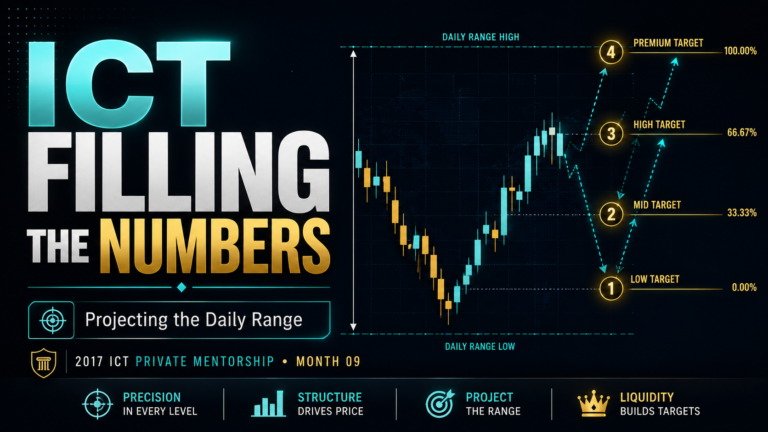
For a bullish setup, the trader may expect price to move toward the projected upper daily range.
For a bearish setup, the trader may expect price to move toward the projected lower daily range.
The average daily range is not an entry signal.
It is a framework for estimating whether the 20-pip objective remains realistic.
The Importance of the London Session High or Low
The New York expansion method requires confidence in what the London session has already established.
For a bullish trade, London should have formed a meaningful low.
For a bearish trade, London should have formed a meaningful high.
The trader should not assume every London high or low will remain intact.
The level should be supported by:
- Higher-timeframe directional bias
- Premium or discount positioning
- Liquidity objectives
- Session timing
- Displacement
- Remaining average daily range
When these conditions align, the New York retracement may offer a continuation entry.
Why the Five-Minute Liquidity Raid Matters
The five-minute swing high or low represents a visible short-term liquidity pool.
When price trades beyond the level, it may:
- Trigger breakout entries
- Remove tight stop losses
- Create a false short-term signal
- Provide liquidity for institutional traders
- Return price to a fair value gap or order block
The trader does not enter simply because the level is broken.
The trader waits for the raid to occur within the correct market context.
Example of a Bullish 20-Pip Setup
Assume the higher-timeframe direction is bullish.
The London session forms the probable daily low and price expands higher.
During the New York session, price retraces into a five-minute bullish fair value gap.
A short-term low forms above the fair value gap.
Price then trades below that low, triggering sell stops and encouraging short sellers to enter.
The market quickly rejects the lower price and creates bullish displacement.
The trader enters long and targets 20 pips.
The market may eventually move much farther, but the fixed 20-pip objective provides a controlled intraday target.
Example of a Bearish 20-Pip Setup
Assume the higher-timeframe direction is bearish.
The London session forms the probable daily high and price expands lower.
During New York, price retraces into a five-minute bearish order block.
A short-term high forms below the order block.
Price trades above the high, taking buy-side liquidity.
The market rejects the premium area and begins moving lower.
The trader enters short and targets 20 pips.
The setup combines session structure, liquidity and institutional price delivery.
Fixed Target Versus Larger Objectives
The ICT 20 Pips Per Day Concept uses a fixed 20-pip target for simplicity.
Michael J. Huddleston explains:
“We’re targeting 20 pips, and it’s a fixed target.”
This prevents the trader from turning a short-term scalp into an unplanned long-term position.
However, some setups may offer considerably more than 20 pips.
A trader may choose to:
- Close the entire trade at 20 pips
- Take partial profit at 20 pips
- Hold a smaller remaining position
- Target a higher-timeframe PD array
- Target the projected average daily range
The management approach should be decided before entering the trade.
Can There Be Multiple Setups in One Day?
More than one five-minute liquidity raid may appear during the same session.
For example, a bullish market may trade below one short-term low, rally and later trade below another newly formed low.
Both setups may offer a reaction.
However, multiple setups do not automatically mean multiple valid trades.
The trader should consider:
- Whether the directional bias remains valid
- Whether the daily range is still incomplete
- Whether the target remains available
- Whether volatility is decreasing
- Whether important news has already occurred
- Whether the market has entered consolidation
The quality of the setup is more important than the number of opportunities.
Markets Where the Concept May Be Applied
Although the teaching is strongly associated with forex, the underlying liquidity pattern may appear in other markets.
It may be studied on:
- Forex pairs
- S&P 500 futures
- Dow futures
- Nasdaq-related markets
- Commodities
- Bonds
- Liquid stocks
The concept should be adjusted for the volatility and tick value of each instrument.
A 20-pip forex target is not directly equivalent to a 20-point target in an index.
The trader must adapt the target and risk model to the selected market.
When to Avoid the Setup
The ICT 20 Pips Per Day Concept becomes less reliable when:
- Higher-timeframe direction is unclear
- London has not established a meaningful high or low
- The average daily range is already complete
- Price is trading in the middle of a broad range
- There is no visible short-term liquidity level
- The liquidity raid lacks a quick rejection
- The entry is far from a logical PD array
- The trader enters after the move has already expanded
- Market volatility is unusually low
- Major news creates unstable price action
The trader should also avoid forcing a setup simply to meet a daily target.
Risk Management Considerations
The original model presents a fixed 20-pip stop and a fixed 20-pip target.
This creates a one-to-one risk-to-reward ratio.
However, traders must still control the amount of capital risked.
A 20-pip stop does not mean the same monetary risk for every position size.
The trader should calculate position size according to:
- Account balance
- Percentage risk
- Stop distance
- Pip value
- Currency pair
- Market volatility
The risk per trade should remain consistent and controlled.
Practical ICT 20 Pips Per Day Checklist
Market Context
- Is the market consolidating, expanding or reversing?
- Is the higher-timeframe direction clear?
- Is price moving toward a logical objective?
- Is enough range still available?
Asian Session Setup
- Is it between 20:00 and 00:00 New York time?
- Is there a visible late New York swing high or low?
- Has Asian price action raided the level?
- Is the raid occurring at a premium or discount array?
- Is a 20-pip reaction realistic?
New York Expansion Setup
- Has London formed the probable daily high or low?
- Has price expanded away from the London extreme?
- Is the five-day average daily range incomplete?
- Has New York raided a five-minute swing level?
- Is the raid aligned with the expected continuation?
- Is there immediate displacement after the raid?
Trade Management
- Is the stop logically positioned?
- Is the position size appropriate?
- Is the 20-pip target clearly marked?
- Will partial profit be taken at 20 pips?
- Has the trade management plan been decided before entry?
Common Mistakes
Common mistakes with the ICT 20 Pips Per Day Concept include:
- Expecting 20 pips every day
- Trading without higher-timeframe context
- Entering every five-minute swing failure
- Ignoring the London session profile
- Trading after the daily range is complete
- Chasing price after the rejection
- Increasing position size to meet a daily target
- Turning a scalp into a long-term trade
- Searching for trades across too many markets without proper analysis
The concept requires selectivity, patience and disciplined execution.
Day Trading Does Not Mean Trading Every Day
The main purpose of the concept is to provide a focused way to study short-term market opportunities.
It should not create pressure to trade daily.
Michael J. Huddleston emphasizes that traders may find these patterns regularly when reviewing many markets, but practice is different from risking real money every day.
A trader can study the setup without entering a live position.
This helps build pattern recognition while avoiding unnecessary exposure.
Final Thoughts
The ICT 20 Pips Per Day Concept is a structured scalping approach based on short-term liquidity raids and session-based price delivery.
The first method focuses on late New York highs and lows being raided during the Asian session.
The second method focuses on New York continuation after London establishes the probable daily high or low.
Both methods use:
- Five-minute market structure
- Short-term liquidity
- Turtle Soup entries
- Premium and discount arrays
- Session timing
- Average daily range
- Fixed risk and profit objectives
The goal is not to force 20 pips from the market every day.
The goal is to recognize conditions where a controlled 20-pip opportunity may reasonably exist and act only when the setup is supported by proper market context.
Consistent trading comes from waiting for valid opportunities, managing risk and avoiding the emotional need to trade every session.