The ICT PD Array Matrix is a price delivery framework used in the Inner Circle Trader (ICT) methodology developed by Michael J. Huddleston. It helps traders understand where price is relatively expensive or cheap inside a dealing range and which ICT price arrays may become important for trade execution.
The basic idea is simple: look for buying opportunities at a discount and selling opportunities at a premium. However, the complete PD Array Matrix goes further by organizing price delivery tools such as Order Blocks, Fair Value Gaps, Breakers and Rejection Blocks within the dealing range.
ICT has dedicated official teaching material to higher-timeframe PD Arrays and has continued discussing PD Array selection and the PD Array Matrix in later lectures.
What is ICT PD Array Matrix?
PD Array refers to a Premium and Discount Array.
A PD Array is a price area or price structure that may influence how price is delivered. These structures are studied within the context of a dealing range.
The PD Array Matrix helps a trader answer three important questions:
- Is price trading in Premium or Discount?
- Which PD Array is available at the current price?
- Which opposing PD Array may act as the next objective?
Instead of randomly buying from an Order Block or selling from a Fair Value Gap, the trader studies where that price structure is located within the larger range.
For example, a bullish PD Array becomes more interesting when the trader expects higher prices and price is trading at a discount.
Similarly, a bearish PD Array may become important when the trader expects lower prices and price is trading at a premium.
Understanding the ICT Dealing Range
Before drawing Premium and Discount, first identify a dealing range.
A dealing range is formed between a meaningful swing low and swing high.
For a bullish price leg:
Dealing Range Low → Dealing Range High
For a bearish price leg:
Dealing Range High → Dealing Range Low
The selected high and low should represent the price range currently being used for analysis.
Do not simply select two random candles.
The range should have a logical relationship with the current market structure, liquidity objective and expected direction of price.
What is Premium in ICT?
The Premium Zone is the upper half of a dealing range.
It is the area above the 50% level or Equilibrium.
Dealing Range High
        |
    PREMIUM
        |
--- EQUILIBRIUM ---
        |
    DISCOUNT
        |
Dealing Range Low
When price trades in Premium, it is relatively expensive compared with the selected dealing range.
Therefore, in a bearish market condition, the trader may look for a bearish PD Array in Premium.
Possible bearish PD Arrays include:
- Old High
- Bearish Rejection Block
- Bearish Order Block
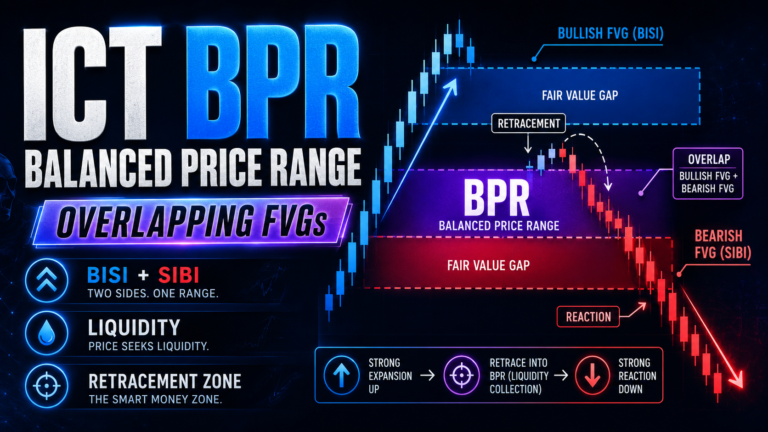
- Bearish Fair Value Gap or SIBI
- Bearish Breaker Block
- Bearish Mitigation Block
The important point is not to sell simply because price enters Premium.
Premium gives location. The PD Array gives a potential area of execution. Market narrative and direction still matter.
What is Discount in ICT?
The Discount Zone is the lower half of the dealing range.
It is located below the 50% Equilibrium level.
When price trades in Discount, price is relatively cheap compared with the selected range.
In a bullish market condition, a trader may look for a bullish PD Array in Discount.
Possible bullish PD Arrays include:
- Old Low
- Bullish Rejection Block
- Bullish Order Block
- Bullish Fair Value Gap or BISI
- Bullish Breaker Block
- Bullish Mitigation Block
Again, price being in Discount does not automatically mean price should be bought.
The trader should first have a reason to expect higher prices.
What is Equilibrium?
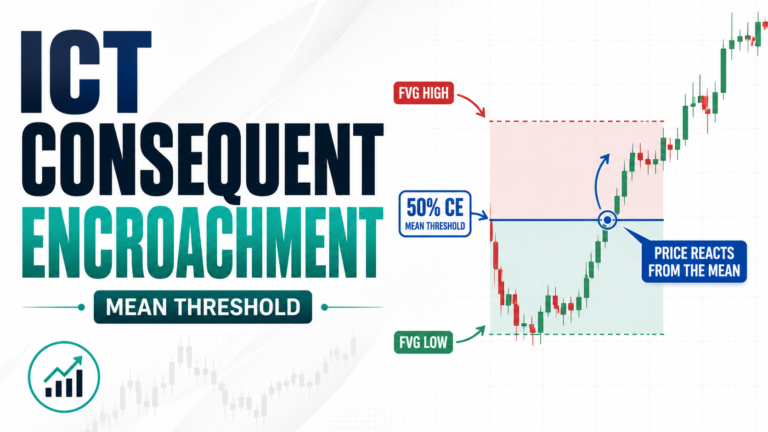
Equilibrium is the 50% level of the dealing range.
It separates Premium from Discount.
Above Equilibrium:
Premium
Below Equilibrium:
Discount
Equilibrium can be viewed as the midpoint of the selected price range.
Price trading around Equilibrium may provide less attractive pricing compared with buying deeper in Discount or selling higher in Premium.
This is why ICT traders commonly wait for price to retrace into the correct half of the dealing range before studying a possible entry.
How to Draw ICT Premium and Discount Range
Drawing Premium and Discount is simple, but selecting the correct dealing range is the important part.
Step 1: Determine Market Direction
First establish whether your analysis expects price to move higher or lower.
Study:
- Higher timeframe market structure
- Draw on liquidity
- Institutional order flow
- Higher timeframe PD Arrays
- Previous highs and lows
For a bullish idea, you are generally searching for a discount buying opportunity.
For a bearish idea, you are generally searching for a premium selling opportunity.
Step 2: Identify the Dealing Range
Select the meaningful swing high and swing low that contain the price movement you are studying.
In a bullish range, identify the low from which price expanded and the relevant range high.
In a bearish range, identify the high from which price declined and the relevant range low.
Step 3: Draw the Fibonacci Tool
Use a Fibonacci Retracement tool between the dealing range high and low.
The most important level for basic Premium and Discount analysis is:
0.5 or 50%
This is Equilibrium.
You may customize the Fibonacci tool to clearly display:
- Premium
- 50% Equilibrium
- Discount
The orientation of the drawing tool may differ depending on the charting platform and Fibonacci settings. What matters is correctly identifying the upper half as Premium and the lower half as Discount.
Step 4: Mark the PD Arrays
Now study the price structures located inside the range.
Mark available:
- Order Blocks
- Fair Value Gaps
- Breakers
- Mitigation Blocks
- Rejection Blocks
- Old Highs and Old Lows
Then separate them according to their location.
Bearish arrays in Premium may become potential selling areas.
Bullish arrays in Discount may become potential buying areas.

Why is the ICT PD Array Matrix Important?
The PD Array Matrix gives context to ICT concepts.
A common mistake is seeing a Fair Value Gap and immediately taking a trade.
But not every FVG has the same purpose.
Suppose you expect bullish price delivery.
You identify two Bullish Fair Value Gaps:
FVG 1 → Premium
FVG 2 → Discount
The Discount FVG may provide more favorable pricing for a bullish idea because it is positioned in the lower half of the dealing range.
The same concept applies to Order Blocks.
A trader should not only ask:
“Is this an Order Block?”
The trader should ask:
“Where is this Order Block positioned in the dealing range?”
This is one reason higher-timeframe PD Array context is emphasized in ICT’s official mentorship material.
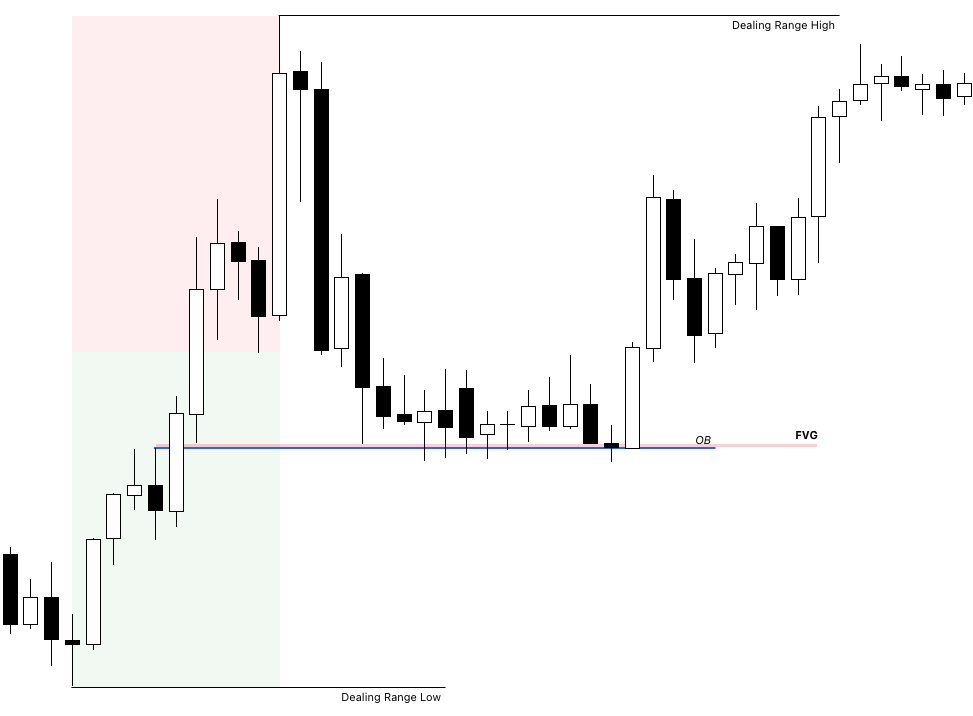
How to Use ICT PD Array Matrix for Bullish Trades
Suppose the higher timeframe analysis suggests price should move higher.
First identify the current dealing range.
Draw the Premium and Discount range.
Now wait for price to trade into Discount.
Inside Discount, identify a bullish PD Array.
For example:
Bullish Bias
      ↓
Price trades into Discount
      ↓
Sell-Side Liquidity is taken
      ↓
Bullish PD Array is reached
      ↓
Bullish displacement
      ↓
Lower Timeframe MSS
      ↓
Entry on retracement
      ↓
Target Buy-Side Liquidity
The bullish PD Array may be a:
- Bullish Order Block
- BISI
- Bullish Breaker
- Bullish Mitigation Block
- Bullish Rejection Block
The PD Array provides the location of interest.
The lower timeframe price action may then provide confirmation for execution.
How to Use ICT PD Array Matrix for Bearish Trades
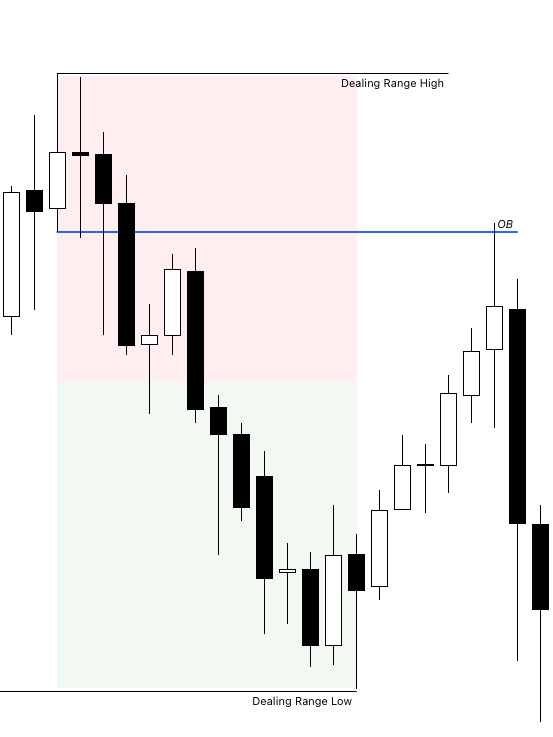
For a bearish trade, the process is reversed.
First establish a bearish higher timeframe expectation.
Identify the dealing range.
Wait for price to trade into Premium.
Then study the bearish PD Arrays available in that area.
Example:
Bearish Bias
      ↓
Price trades into Premium
      ↓
Buy-Side Liquidity is taken
      ↓
Bearish PD Array is reached
      ↓
Bearish displacement
      ↓
Lower Timeframe MSS
      ↓
Entry on retracement
      ↓
Target Sell-Side Liquidity
A bearish PD Array may be a:
- Bearish Order Block
- SIBI
- Bearish Breaker
- Bearish Mitigation Block
- Bearish Rejection Block
Premium and Discount should therefore be used as part of a broader market-structure framework rather than as an independent buy or sell signal.
PD Array to PD Array Price Delivery
One useful way to study the ICT PD Array Matrix is to observe how price moves from one PD Array toward another PD Array.
For example:
Discount Bullish PD Array
          ↓
Price expands higher
          ↓
Equilibrium
          ↓
Premium Bearish PD Array
Price may reprice from a discounted array toward a premium array.
In a bearish condition:
Premium Bearish PD Array
          ↓
Price delivers lower
          ↓
Equilibrium
          ↓
Discount Bullish PD Array
The opposing PD Array may become a possible price objective depending on the market narrative and liquidity target.
ICT’s official PD Array teaching treats higher-timeframe arrays as part of the framework for understanding trade conditions and setup progression.
Higher Timeframe and Lower Timeframe PD Arrays
PD Arrays exist on every timeframe.
A Daily Fair Value Gap is a Daily PD Array.
A 1-hour Order Block is a 1-hour PD Array.
A 5-minute Breaker is a 5-minute PD Array.
Higher timeframe PD Arrays generally provide the broader area of interest.
Lower timeframe PD Arrays may help refine execution.
Example:
Daily Discount
      ↓
Daily Bullish FVG
      ↓
15-Minute Bullish Displacement
      ↓
5-Minute MSS
      ↓
5-Minute Bullish FVG Entry
In this example, the Daily PD Array gives the higher timeframe location.
The lower timeframe price action is used for entry refinement.
Common Mistakes When Using Premium and Discount
Using a random dealing range: The wrong high and low will give the wrong Premium and Discount zones.
Buying every Discount: Discount is not automatically bullish.
Selling every Premium: Premium is not automatically bearish.
Ignoring market bias: The expected direction of price should be considered before selecting a PD Array.
Trading every PD Array: Not every Order Block, FVG or Breaker should be used as an entry.
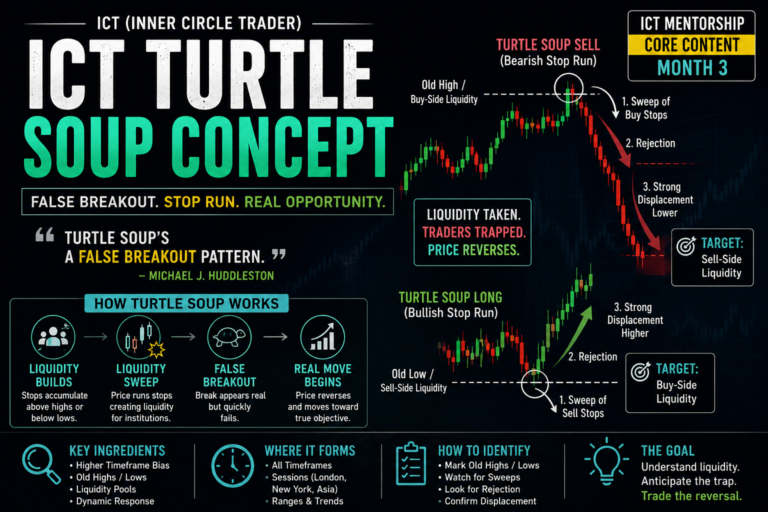
Ignoring liquidity: A liquidity raid before price reacts from a PD Array may provide important context.
Using only the 50% level: Equilibrium divides the range, but the actual PD Arrays inside Premium and Discount are also important.
Final Thoughts
The ICT PD Array Matrix provides a framework for understanding the location of ICT price arrays inside a dealing range.
The dealing range is divided into:
Premium → Above Equilibrium
Discount → Below Equilibrium
A trader expecting higher prices can study bullish PD Arrays in Discount. A trader expecting lower prices can study bearish PD Arrays in Premium.
However, the real purpose of the PD Array Matrix is not simply to follow the rule of “buy Discount and sell Premium.”
It is to understand which price array is available, where it is positioned, and how price may deliver from one PD Array toward another.
When combined with higher timeframe bias, liquidity, displacement and lower timeframe market structure, the ICT PD Array Matrix becomes an important framework for selecting better trade locations.