The ICT Propulsion Block is an advanced Order Block concept taught by Michael J. Huddleston, founder of the ICT (Inner Circle Trader) methodology. It explains how a new candle can interact with a previously confirmed Order Block and then become a highly sensitive price level for continuation in the same direction.
A Propulsion Block is not simply another bullish or bearish Order Block.
It is created when price trades back into a previous Order Block that is already showing willingness to support movement in a particular direction.
A new candle forms inside or interacts with that previous Order Block.
This newer candle then takes over the role of price support or resistance.
When price returns to the Propulsion Block, the reaction is expected to be quick.
The candle should show very little drawdown.
Price may only touch the edge of the candle or move slightly into its range before aggressively expanding away.
This immediate price response is the main characteristic of an ICT Propulsion Block.
What is an ICT Propulsion Block?
An ICT Propulsion Block is a candle or bar that trades into a previous bullish or bearish Order Block and then becomes a new sensitive support or resistance level for continued price movement.
For a Bullish ICT Propulsion Block, a down-close candle trades into a previous bullish Order Block.
The underlying market context is bullish.
Price then moves higher.
The newer down-close candle becomes the Propulsion Block.
When price later retraces into this candle, the range is expected to provide highly sensitive support.
For a Bearish ICT Propulsion Block, an up-close candle trades into a previous bearish Order Block.
The underlying context is bearish.
Price moves lower.
The newer up-close candle becomes the bearish Propulsion Block.
When price retraces higher into the candle, the block is expected to act as highly sensitive resistance.
The main idea is that the new candle is reinforced by a previous Order Block.
It is not working as an isolated candle.
Main Idea Behind ICT Propulsion Block
The ICT Propulsion Block is part of reinforcing Order Block theory.
Suppose a bullish Order Block has already formed.
The market has shown willingness to move higher from this down-close candle or group of consecutive down candles.
Price moves away from the Order Block.
Later, another down-close candle trades back into the previous bullish Order Block.
Because the previous Order Block is already predisposed to support higher price movement, the new down-close candle becomes important.
This candle becomes a Bullish Propulsion Block.
The new candle is effectively reinforcing the previous bullish Order Block.
Michael J. Huddleston explains the concept in the mentorship lesson:
“That candle becomes a propulsion candle.”
The new candle now becomes a highly sensitive reference point.
When price returns to the Propulsion Block, traders expect quick movement away from it.
Why is It Called a Propulsion Block?
The name ICT Propulsion Block comes from the expected price behavior after the candle is revisited.
Price should not remain inside the candle for a long period.
It should not create large drawdown through the range.
The expected reaction is sudden.
Price touches the Propulsion Block and quickly expands in the expected direction.
Michael J. Huddleston explains:
“The market will show a sudden and violent movement away from that down candle.”
This is the main reason the candle is described as a Propulsion Block.
The block is expected to propel price.
For a bullish setup, price should respond higher.
For a bearish setup, price should respond lower.
The response provides immediate information about whether the trading idea is correct.
How Does an ICT Propulsion Block Form?
An ICT Propulsion Block forms through an interaction between two Order Block ranges.
The first Order Block establishes directional willingness.
The second candle trades into the first Order Block.
The second candle then becomes the Propulsion Block.
Consider a bullish example.
A down-close candle forms.
Price moves higher from the candle.
This confirms a bullish Order Block.
Later, price retraces.
Another down-close candle trades into the previous bullish Order Block.
The second candle closes.
Price then moves higher.
The newer down-close candle becomes the Bullish Propulsion Block.
The bearish formation is the opposite.
An up-close candle is followed by bearish price movement.
This establishes a bearish Order Block.
Later, another up-close candle trades into the previous bearish Order Block.
Price then moves lower.
The newer up-close candle becomes the Bearish Propulsion Block.
Types of ICT Propulsion Block
There are mainly two types of ICT Propulsion Block:
- Bullish ICT Propulsion Block
- Bearish ICT Propulsion Block
The Bullish Propulsion Block provides potential price support.
The Bearish Propulsion Block provides potential price resistance.
Both setups are based on the same reinforcing Order Block theory.
The main difference is the direction of price.
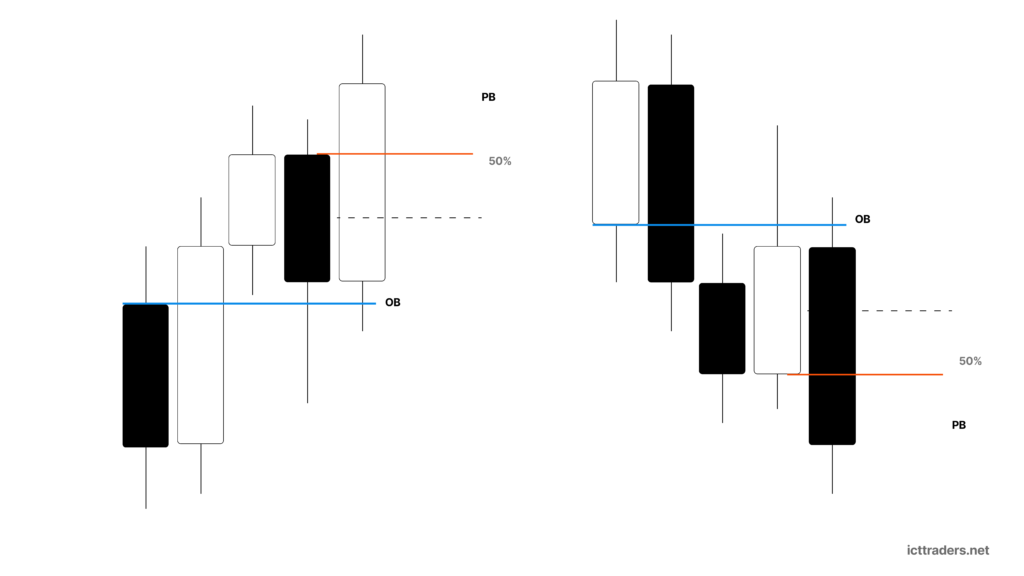
Bullish ICT Propulsion Block
A Bullish ICT Propulsion Block is a down-close candle that trades into a previous bullish Order Block while the underlying market context is bullish.
The first bullish Order Block has already shown price willingness to move higher.
Price later retraces into this Order Block.
A new down-close candle forms during the retracement.
This new candle trades into the previous bullish Order Block.
Price then moves higher.
The newer down-close candle becomes the Bullish Propulsion Block.
When price trades back down into this candle, immediate bullish responsiveness is expected.
The Propulsion Block takes over the role of short-term price support.
Bullish ICT Propulsion Block Formation
The basic Bullish Propulsion Block formation is:
Bullish Order Block Forms → Price Moves Higher → New Down Candle Trades Into Previous Bullish Order Block → Price Moves Higher → New Down Candle Becomes Propulsion Block → Price Retraces → Propulsion Block Reacts → Price Expands Higher
The first Order Block is very important.
Without the previous bullish Order Block, the new down-close candle is simply another possible Order Block.
The interaction between the two candles creates the Propulsion Block concept.
The new down candle is forming at a price level that has already shown bullish willingness.
This makes the candle highly sensitive when price returns to it.
How to Identify a Bullish ICT Propulsion Block
First, establish bullish market context.
Price should show a willingness to move higher.
Now identify a previous bullish Order Block.
Look for a down-close candle before bullish price movement.
In some conditions, several consecutive down candles may be grouped together as one bullish Order Block range.
Wait for price to trade higher from the Order Block.
This confirms bullish willingness.
Now observe the next retracement.
Look for another down-close candle that trades back into the previous bullish Order Block.
The new candle should interact with the old bullish Order Block.
After the new down candle forms, price should move higher.
The new down-close candle can now be identified as a Bullish ICT Propulsion Block.
Mark the candle.
Pay close attention when price later trades back towards the high of the Propulsion Block.
A strong bullish reaction is expected.
Rules of Bullish ICT Propulsion Block
The underlying price context should be bullish.
A previous bullish Order Block must be identifiable.
The previous Order Block should show willingness for price to move higher.
A new down-close candle should trade into the previous bullish Order Block.
The new down candle should form at a higher price level within the bullish price movement.
Price should move higher after the new candle forms.
The new down-close candle becomes the Bullish Propulsion Block.
A later retracement into the block should show immediate bullish responsiveness.
The mean threshold of the Propulsion Block should generally remain protected.
A clear violation of the mean threshold weakens the bullish setup.
Bearish ICT Propulsion Block
A Bearish ICT Propulsion Block is an up-close candle that trades into a previous bearish Order Block when the underlying market context is bearish.
The previous bearish Order Block has already shown willingness for price to move lower.
Price later retraces higher.
A new up-close candle trades into the previous bearish Order Block.
The market then moves lower.
The newer up-close candle becomes the Bearish Propulsion Block.
When price trades back into this candle, the block should show highly sensitive resistance.
A quick bearish price response is expected.
The candle takes over the role of resistance for lower price movement.
Bearish ICT Propulsion Block Formation
The basic bearish formation is:
Bearish Order Block Forms → Price Moves Lower → New Up Candle Trades Into Previous Bearish Order Block → Price Moves Lower → New Up Candle Becomes Propulsion Block → Price Retraces Higher → Propulsion Block Reacts → Price Expands Lower
The previous bearish Order Block establishes directional willingness.
The second up-close candle interacts with this old Order Block.
This creates the reinforced bearish price reference.
When price later trades back towards the Propulsion Block, the market should show quick resistance.
How to Identify a Bearish ICT Propulsion Block
First, establish a bearish market context.
Find a previous bearish Order Block.
A bearish Order Block is generally an up-close candle before price moves lower.
Wait for bearish displacement or clear willingness for price to trade lower.
Now observe a retracement higher.
Look for another up-close candle that trades into the previous bearish Order Block.
The new up-close candle is interacting with a previously confirmed bearish price range.
Price should then move lower from this area.
The newer up-close candle becomes the Bearish ICT Propulsion Block.
Mark the candle range.
When price later returns towards the Propulsion Block, observe the reaction.
The price should show immediate bearish responsiveness.
Rules of Bearish ICT Propulsion Block
The underlying market context should be bearish.
A previous bearish Order Block must exist.
The old Order Block should show price willingness to move lower.
A new up-close candle should trade into the previous bearish Order Block.
Price should move lower after the new candle forms.
The newer up-close candle becomes the Bearish Propulsion Block.
Price may later retrace into the block.
The Propulsion Block should show immediate bearish responsiveness.
The mean threshold should generally remain protected.
A significant violation of the mean threshold weakens the bearish setup.
Mean Threshold of ICT Propulsion Block
The mean threshold is one of the most important parts of the ICT Propulsion Block concept.
The mean threshold represents the 50% level of the candle body.
To find the mean threshold, identify the Propulsion Block candle body.
Find the midpoint between the candle open and close.
This midpoint creates the mean threshold.
According to the ICT mentorship lesson, a Propulsion Block is highly sensitive.
Price should normally not violate the mean threshold.
Michael J. Huddleston explains:
“It should never see the mean threshold break.”
Price may trade into the Propulsion Block.
In a bullish model, price can trade towards the high of the down-close candle.
The market may move a pip or two beyond the high.
But a deep movement through the candle body is generally not expected.
In a bearish model, price may trade towards the low of the up-close Propulsion Block.
The reaction may occur immediately from the candle boundary.
In some conditions, price can reach the mean threshold.
But a clear break through the midpoint suggests that the Propulsion Block may not be providing the expected sensitivity.
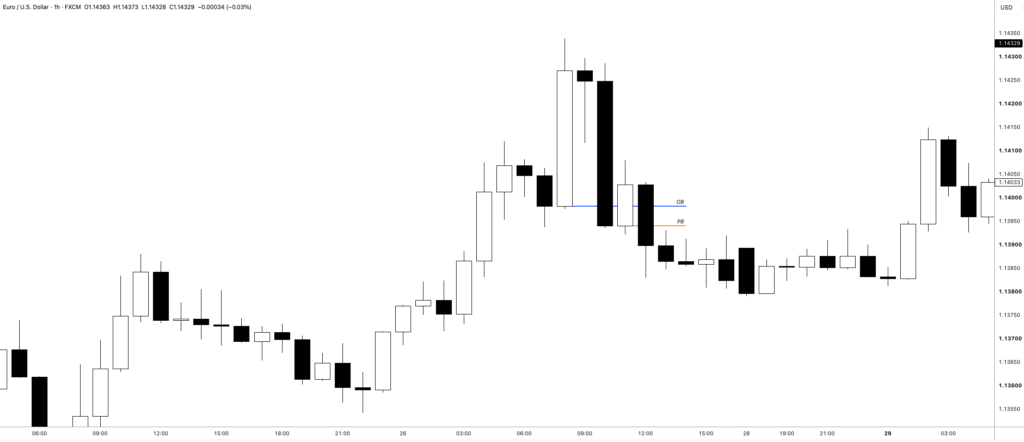
Why Mean Threshold is Important
The ICT Propulsion Block is expected to produce immediate price responsiveness.
This means price should not need to deeply retrace through the candle.
Suppose a Bullish Propulsion Block has formed.
Price trades back into the down-close candle.
If the setup is valid, the candle should provide strong support.
Price should quickly move higher.
If price continues falling and violates the mean threshold, the expected bullish sensitivity is not present.
The trade idea becomes weaker.
The same logic applies to a Bearish Propulsion Block.
Price trades higher into the up-close candle.
A valid bearish Propulsion Block should cause a quick bearish reaction.
If price aggressively trades above the mean threshold, the bearish setup may be invalid.
This gives traders immediate feedback.
Immediate Responsiveness in ICT Propulsion Block
Immediate responsiveness is the most important behavior expected from a Propulsion Block.
The market should react quickly.
There should be little drawdown.
Price should not spend a long time consolidating inside the candle range.
For a bullish Propulsion Block, price trades down into the candle and quickly moves higher.
For a bearish Propulsion Block, price trades higher into the candle and quickly moves lower.
Michael J. Huddleston describes this behavior as:
“It propels price quickly and suddenly and it gives you immediate feedback.”
This immediate response makes the Propulsion Block useful for short-term traders.
The trader quickly learns whether the market is respecting the level.
If the level reacts, price can move rapidly in the expected direction.
If the level fails to provide sensitivity, the trader receives an early warning that the market narrative may be wrong.
ICT Propulsion Block and Previous Order Block
A Propulsion Block must be understood in relation to a previous Order Block.
This is one of the biggest differences between an ICT Propulsion Block and a normal Order Block.
Suppose a down-close candle forms in a bullish market.
Price moves higher.
The candle may be a Bullish Order Block.
Later another down-close candle forms.
If the candle does not interact with a previous bullish Order Block, it may simply be another Order Block.
For the Propulsion Block model, the newer candle trades into the previous bullish Order Block.
The previous price range reinforces the new candle.
The new candle then becomes the highly sensitive level.
The same is true for bearish price action.
A new up-close candle should trade into a previous bearish Order Block.
The previous bearish price range reinforces the new candle.
This relationship between the older and newer Order Block is the foundation of the Propulsion Block.
Can Multiple Candles Form the Previous Order Block?
Yes.
The previous Order Block does not always need to be a single candle.
In the mentorship example, Michael J. Huddleston explains that several consecutive down candles can be viewed together as one bullish Order Block.
For example, three consecutive down candles represent continuous downward price movement.
The complete movement may be framed as one bullish Order Block range when price later moves higher through it.
The new Propulsion Block can trade into this broader Order Block range.
The same logic can be applied to consecutive up candles in a bearish condition.
The important part is understanding the continuous price movement and the displacement that confirms the Order Block.
Traders should not mechanically separate every candle without understanding the price delivery.
How to Draw an ICT Propulsion Block
First, identify the previous Order Block.
For a bullish setup, mark the down-close candle or consecutive down-candle range before price moves higher.
For a bearish setup, mark the up-close candle or consecutive up-candle range before price moves lower.
Wait for price to retrace into the previous Order Block.
Identify the new candle that trades into the old Order Block.
For a Bullish Propulsion Block, mark the new down-close candle.
For a Bearish Propulsion Block, mark the new up-close candle.
Once price moves away from this candle in the expected direction, the candle becomes the Propulsion Block reference.
Mark the candle body.
Calculate the mean threshold or 50% level of the body.
Also keep the high or low of the candle visible.
For a bullish setup, the high of the down-close candle can be a highly sensitive entry reference.
For a bearish setup, the low of the up-close candle can provide a highly sensitive price reference.
How to Trade a Bullish ICT Propulsion Block
First, identify a bullish market narrative.
Find a confirmed bullish Order Block.
Price should already show willingness to move higher from the Order Block.
Wait for a new down-close candle to trade into the previous bullish Order Block.
Observe the price movement after the candle closes.
Price should move higher.
Mark the new down-close candle as the Bullish Propulsion Block.
Now wait for price to retrace.
Pay attention when price trades towards the high of the Propulsion Block.
The high can provide a sensitive price reference.
Price may trade directly to the level or move slightly below it.
The expected reaction is immediate bullish movement.
A trader can use the Propulsion Block as a potential long entry area when the broader price narrative remains bullish.
The mean threshold can help with trade management.
If price deeply violates the mean threshold, the setup may not be behaving like a valid Propulsion Block.
The trader receives early feedback that the long idea may be incorrect.
How to Trade a Bearish ICT Propulsion Block
First, establish a bearish price narrative.
Identify a confirmed bearish Order Block.
Price should show willingness to move lower from the range.
Wait for another up-close candle to trade into the old bearish Order Block.
Price should then move lower.
Mark the new up-close candle as the Bearish Propulsion Block.
Wait for a price retracement.
Observe price when it trades towards the low of the Propulsion Block.
The market may react directly from the low of the candle.
In some conditions, price can trade into the body and reach the mean threshold.
The expected response is immediate bearish movement.
A trader can consider the Propulsion Block as a potential short entry area within the bearish narrative.
If price breaks significantly through the mean threshold, the expected bearish sensitivity is missing.
The trade setup becomes weaker.
ICT Propulsion Block as an Entry Model
The ICT Propulsion Block can provide a highly sensitive entry reference.
A normal Order Block may allow a wider price range.
Price can trade deeper into the Order Block before reacting.
A Propulsion Block is different.
Because the candle has already traded into a previous Order Block, the new range should be more sensitive.
The market has already interacted with a price level predisposed towards bullish or bearish delivery.
Therefore, a later revisit to the Propulsion Block should cause quick price response.
For bullish trades, traders may focus on the high of the down-close Propulsion Block.
For bearish trades, the low of the up-close Propulsion Block may be important.
The mean threshold can provide an additional reference for invalidation or risk management.
ICT Propulsion Block and Stop Loss
One advantage of a Propulsion Block is the potential for a relatively tight risk framework.
The block is expected to show immediate responsiveness.
Suppose price trades into a Bullish Propulsion Block.
The market should quickly move higher.
The mean threshold should generally remain protected.
If price breaks through the mean threshold, the bullish idea may be wrong.
This gives the trader immediate feedback.
A tighter stop framework may therefore be possible compared with a wider price range.
Michael J. Huddleston explains that a trader may have:
“A really ultra tight stop loss on your long entry.”
The exact stop-loss placement depends on the trader’s entry model and risk management.
However, the concept is clear.
A Propulsion Block should not require large drawdown before working.
When Does an ICT Propulsion Block Fail?
A Propulsion Block becomes questionable when price does not show immediate responsiveness.
For a Bullish Propulsion Block, price trades down into the candle but continues lower.
The market moves deeply through the candle body.
The mean threshold is violated.
This suggests the expected bullish sensitivity is missing.
For a Bearish Propulsion Block, price trades higher into the range but continues expanding upwards.
The mean threshold is broken.
The bearish setup becomes weaker.
A failure does not only mean a losing trade.
It can provide information.
If a bullish Propulsion Block fails, the trader may need to move to the sidelines.
In some conditions, the failure can support a possible bearish reversal narrative.
The opposite applies when a bearish Propulsion Block fails.
The important point is to listen to the immediate market response.
ICT Propulsion Block vs ICT Order Block
An ICT Order Block and an ICT Propulsion Block are related but not exactly the same.
An Order Block is a candle or price range associated with price displacement.
A bullish Order Block is commonly a down-close candle before price moves higher.
A bearish Order Block is commonly an up-close candle before price moves lower.
An ICT Propulsion Block requires another condition.
The candle must trade into a previous Order Block.
A Bullish Propulsion Block is a newer down-close candle that trades into a previously identified bullish Order Block.
A Bearish Propulsion Block is a newer up-close candle that trades into a previous bearish Order Block.
The previous Order Block reinforces the new candle.
The Propulsion Block is therefore expected to be more sensitive.
Immediate price response and mean threshold protection are important characteristics.
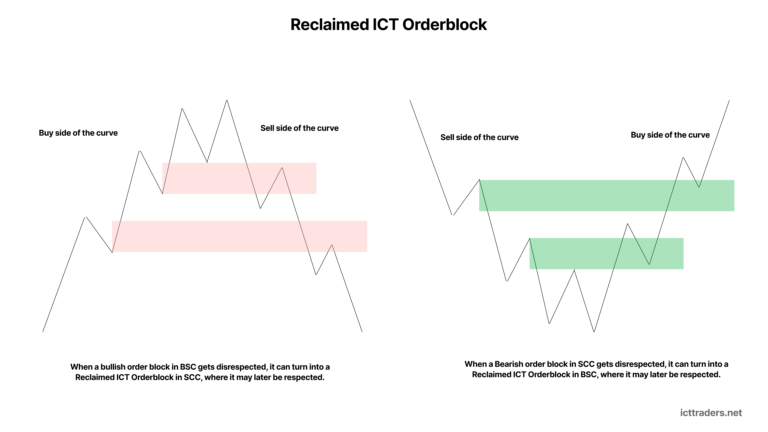
ICT Propulsion Block vs Reclaimed ICT Orderblock
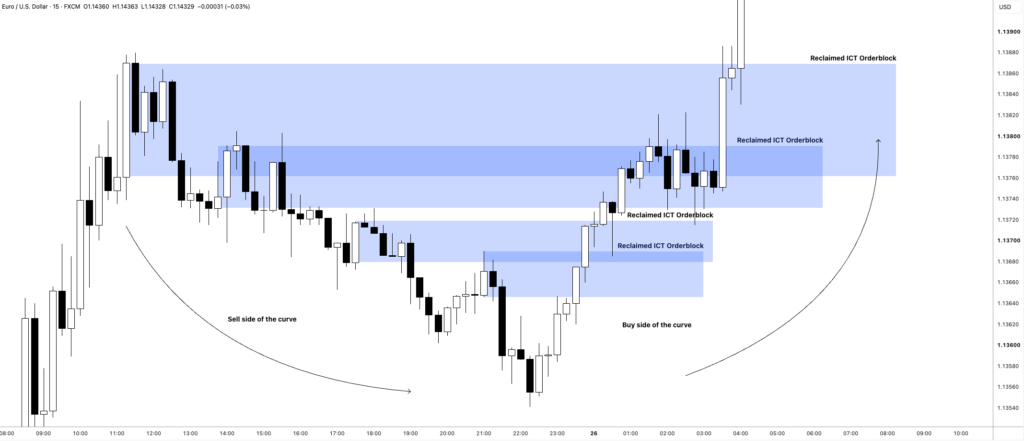
The ICT Propulsion Block should not be confused with a Reclaimed ICT Orderblock.
A Reclaimed ICT Orderblock focuses on old Order Blocks formed on one side of a Market Maker Buy or Sell Model.
After the major high or low forms, price on the opposite side of the curve returns to these old Order Blocks.
The old blocks are reclaimed.
A Propulsion Block focuses on a new candle interacting directly with a previous Order Block.
The newer candle trades into the old Order Block and becomes a new sensitive support or resistance range.
Therefore, the Reclaimed Order Block is an old price reference being reused.
The Propulsion Block is a newer candle being reinforced by an older Order Block.
Both are part of advanced ICT Order Block theory, but the price formation is different.
Common Mistakes When Trading ICT Propulsion Block
One common mistake is marking every down candle as a Bullish Propulsion Block.
The down candle should trade into a previous bullish Order Block.
Another mistake is marking every up candle as a Bearish Propulsion Block.
The new up candle should interact with an old bearish Order Block.
Traders also ignore the underlying market context.
A bullish Propulsion Block should form in bullish conditions.
A bearish Propulsion Block should form in bearish conditions.
Another common mistake is ignoring displacement.
The previous Order Block should already show willingness for price to move in the expected direction.
Traders may also allow excessive drawdown.
The Propulsion Block is expected to be highly sensitive.
A deep break through the mean threshold is a warning.
Another mistake is holding onto the trade idea when immediate responsiveness is missing.
The Propulsion Block should provide fast feedback.
If price is not responding correctly, the trader should reconsider the market narrative.
Simple ICT Propulsion Block Checklist
Before identifying an ICT Propulsion Block, check the following:
Market Context: Is the underlying price narrative bullish or bearish?
Previous Order Block: Is there a confirmed bullish or bearish Order Block?
Directional Willingness: Did price show displacement from the previous Order Block?
New Candle: Has a new down-close or up-close candle formed?
Order Block Interaction: Did the new candle trade into the previous Order Block?
Price Expansion: Did price move in the expected direction after the new candle?
Propulsion Block: Can the new candle now be marked as the sensitive price reference?
Retracement: Has price returned to the Propulsion Block?
Immediate Response: Is price quickly moving away from the candle?
Mean Threshold: Is the 50% level of the candle body being protected?
These conditions help separate a true Propulsion Block setup from a random candle retracement.
Final Understanding of ICT Propulsion Block
The ICT Propulsion Block is an advanced reinforcing Order Block concept taught by Michael J. Huddleston, founder of the ICT or Inner Circle Trader methodology.
A Bullish ICT Propulsion Block forms when a new down-close candle trades into a previous bullish Order Block.
The older Order Block has already shown price willingness to move higher.
The new down candle interacts with this bullish price range and price expands higher.
The newer candle becomes a sensitive support level.
When price retraces into the Bullish Propulsion Block, immediate bullish responsiveness is expected.
A Bearish ICT Propulsion Block forms when a new up-close candle trades into a previous bearish Order Block.
The old bearish Order Block has already shown willingness for price to move lower.
Price interacts with the old range through the new up-close candle and then expands lower.
The newer candle becomes a highly sensitive resistance level.
When price returns to the Bearish Propulsion Block, immediate bearish responsiveness is expected.
The mean threshold is one of the most important reference points.
A valid Propulsion Block should generally protect the midpoint of the candle body.
A significant violation of the mean threshold suggests that the setup may not be behaving correctly.
The key is immediate feedback.
Find the previous Order Block.
Wait for a new candle to trade into it.
Observe the price expansion.
Mark the Propulsion Block.
Then watch for a sensitive retest and sudden price response.
This is the core logic behind the ICT Propulsion Block concept within Michael J. Huddleston’s ICT trading methodology.