New traders often enter the Forex market believing they need more indicators, more strategies, and more trading opportunities. In the ICT Forex – Market Maker Primer Course, Michael J. Huddleston, founder of the ICT (Inner Circle Trader) concepts, teaches a very different approach.
Instead of trying to learn everything at once, a new trader should first understand what makes price move, where liquidity is resting, and why price is attracted to certain levels.
As Michael J. Huddleston explains:
“All you need to know is the open, high, low and close.”
The goal for a beginner is not to trade constantly. The first objective is to train the eyes to see price action from an institutional perspective.
Stop Trying to Learn Every Trading Strategy
One of the biggest mistakes new traders make is overloading their charts and minds with different trading theories.
A beginner may study:
- Elliott Wave
- Traditional support and resistance
- Supply and demand
- Harmonic patterns
- Chart patterns
- Multiple technical indicators
The problem is that the trader becomes focused on finding a buy or sell signal rather than understanding what price is actually seeking.
The ICT approach asks a completely different question:
Where are the orders resting?
Instead of looking for another indicator, new traders should begin studying the relationship between price and liquidity.
First Understand What Makes Price Move
Before placing trades, ICT teaches that traders should understand the basic reason price moves from one level to another.
Michael J. Huddleston states:
“Prices move to levels where orders reside.”
This is one of the most important ideas behind ICT trading.
Orders commonly accumulate:
- Above old highs
- Below old lows
- Above equal highs
- Below equal lows
These areas can form liquidity pools.
Price may move toward these locations because the orders resting there can provide liquidity for larger market participants.
Therefore, instead of simply asking:
“Will price go up or down?”
A new trader should ask:
“Where is the nearest obvious pool of liquidity?”
This small change in thinking can completely change the way a trader reads a chart.
Study Equal Highs and Equal Lows
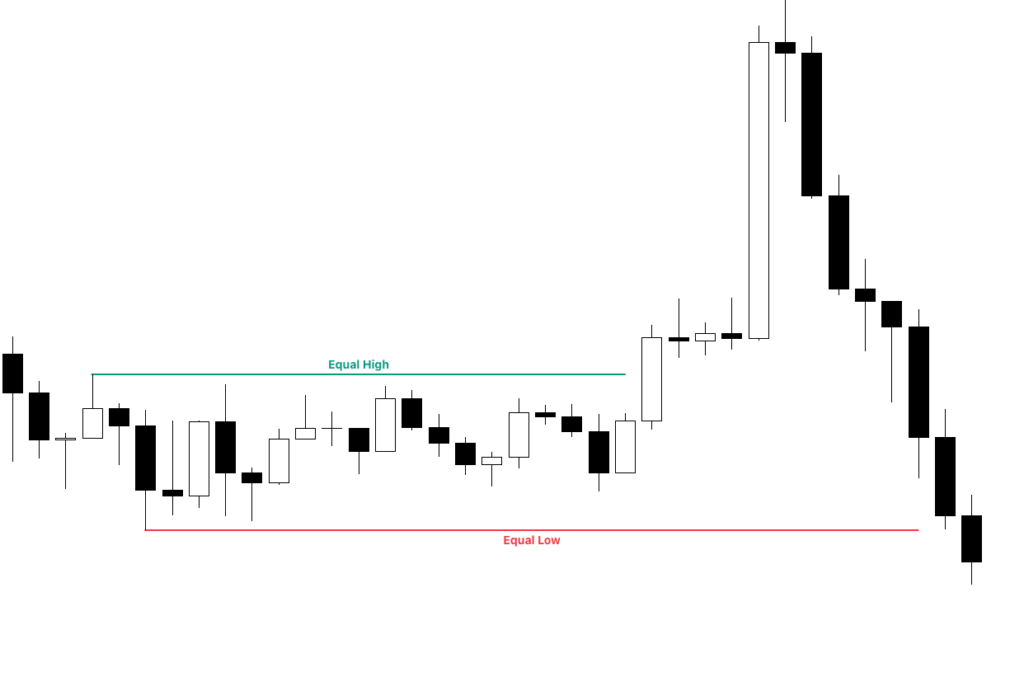
One of the first practical exercises ICT recommends for new traders is identifying equal highs and equal lows.
Equal highs usually appear as two or more highs at approximately the same price.
Equal lows appear as two or more lows formed around the same price.
The levels do not need to be perfectly identical. If the highs or lows are only a few pips apart and visually appear close, they may still represent a double top or double bottom structure.
Retail trading theory may view:
Equal highs → Resistance
Equal lows → Support
ICT traders look at them differently.
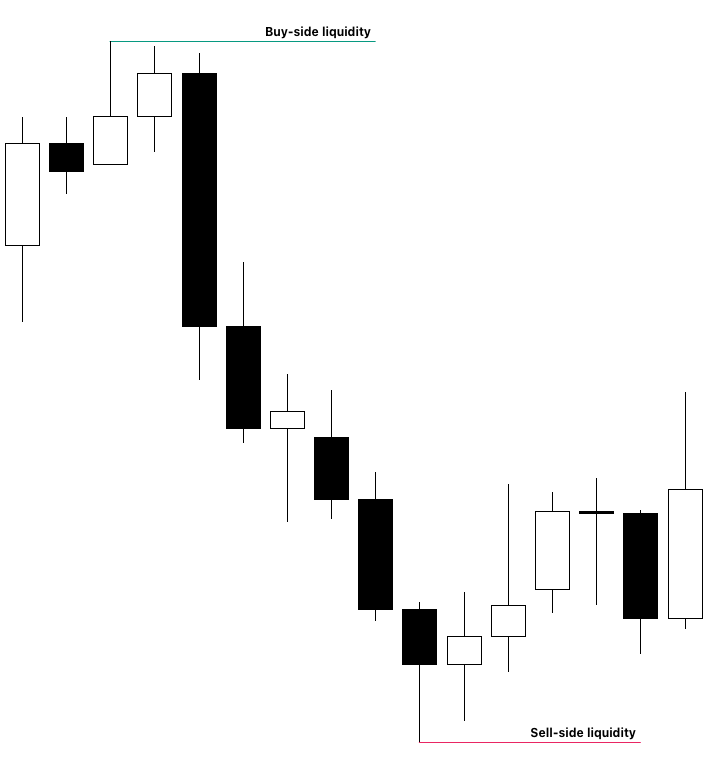
Equal highs → Potential buy-side liquidity
Equal lows → Potential sell-side liquidity
Above equal highs, short sellers may have protective buy stops.
Below equal lows, long traders may have protective sell stops.
These orders make the levels important.
Think About Where Other Traders May Be Wrong
New traders are commonly taught where to enter a trade.
ICT encourages beginners to study something different.
Michael J. Huddleston explains:
“I want you to think where everyone else’s trade idea would fail them.”
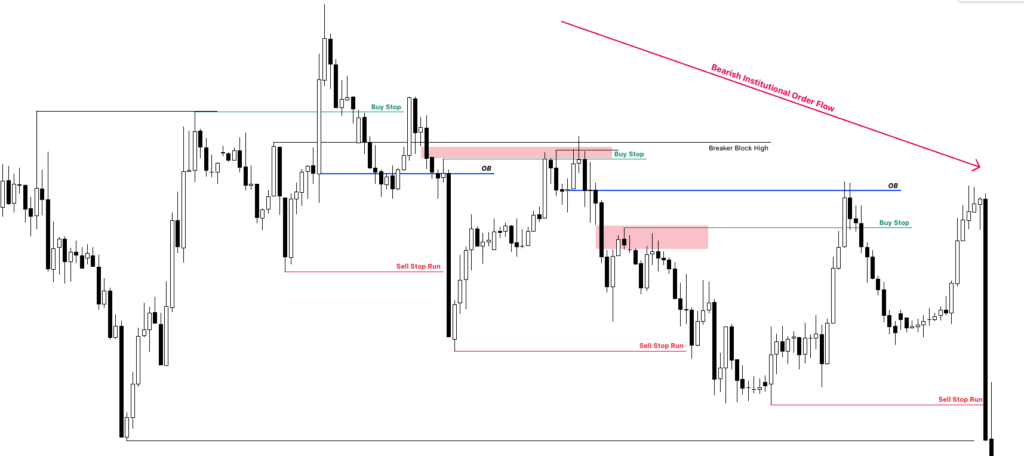
For example, imagine price forms a double bottom.
A traditional trader may see support and enter a long position.
Their stop loss may be placed below the equal lows.
An ICT trader studies the same formation and recognizes that sell stops may be resting below those lows.
Therefore, price moving below the double bottom does not automatically mean random market behavior.
It may be a liquidity raid or stop run.
The beginner should train themselves to identify where traditional trade ideas may become vulnerable.
Practice on a Demo Account First
New traders are often in a hurry to deposit money and start live trading.
ICT strongly discourages this approach before developing consistency.
Michael J. Huddleston states:
“If you can’t do well in a demo, you’re not going to do well on a live account.”
A demo account gives the trader an environment where they can study execution, patience, and trade management without risking real capital.
ICT refers to this as playing in the sandbox.
The objective is not to prove how much virtual money you can make.
The objective is to develop good habits.
Before actively demo trading, new traders should spend time simply observing price.
A Simple One-Month Study Exercise for New Traders
Michael J. Huddleston provides a very simple exercise for beginners.
Choose one or two currency pairs.
Open a 15-minute chart.
Then begin identifying:
Equal highs → Mark potential buy stops
Equal lows → Mark potential sell stops
Study how price behaves around these levels.
Watch what happens when price trades above equal highs.
Watch what happens when price trades below equal lows.
Then observe whether price reverses or begins seeking another liquidity pool.
The beginner should perform this exercise for approximately one full month.
Do not immediately try to predict every move.
Do not force trades.
The primary objective is observation.
Over time, the trader begins recognizing the repeated relationship between price and liquidity.
Focus on One or Two Markets
Forex provides a large number of currency pairs and almost continuous market movement.
This creates a dangerous temptation for beginners.
When one pair is not moving, the trader opens another chart.
Then another.
Soon, the trader is watching ten or twenty instruments and searching for any possible trade.
This usually leads to overtrading.
New traders should instead select one or two markets and study them repeatedly.
The goal is depth of observation rather than the number of trading opportunities.
You need enough chart exposure to recognize how liquidity raids, price expansion, and retracements repeatedly develop.
Aim for a Small Weekly Objective
Another important ICT lesson for new traders is to lower their initial expectations.
Michael J. Huddleston teaches beginners to initially think about approximately 20 to 30 pips per week.
The purpose is not to create a permanent profit target for every trader.
It is a training exercise.
Find one quality setup.
Execute it correctly.
Manage it.
Reach the weekly practice objective.
Then stop actively demo trading for that week.
This teaches two critical skills:
Patience
You learn to wait for another valid setup instead of reacting to every market movement.
Discipline
You learn to follow a predefined rule and stop trading even when the market continues moving.
As Huddleston explains:
“We’re not gambling. We’re looking for high probability scenarios and setups.”
Trading more does not automatically mean earning more.
A new ICT trader should focus on quality of execution rather than quantity of trades.
Learn High-Probability Liquidity Pools
Not every high or low should automatically become a trade target.
New traders need to study which liquidity pools fit the overall price narrative.
ICT commonly focuses on:
- Old highs
- Old lows
- Equal highs
- Equal lows
- Double tops
- Double bottoms
When studying a bearish scenario, ask:
Where are the sell stops below price?
When studying a bullish scenario, ask:
Where are the buy stops above price?
Price often moves between pools of liquidity.
A simple conceptual model is:
Buy-side liquidity → Liquidity raid → Price repricing → Sell-side liquidity
Or:
Sell-side liquidity → Liquidity raid → Price repricing → Buy-side liquidity
The exact movement depends on market context, but beginners should learn to recognize liquidity as a potential price objective.
Learn ICT Order Blocks With Context
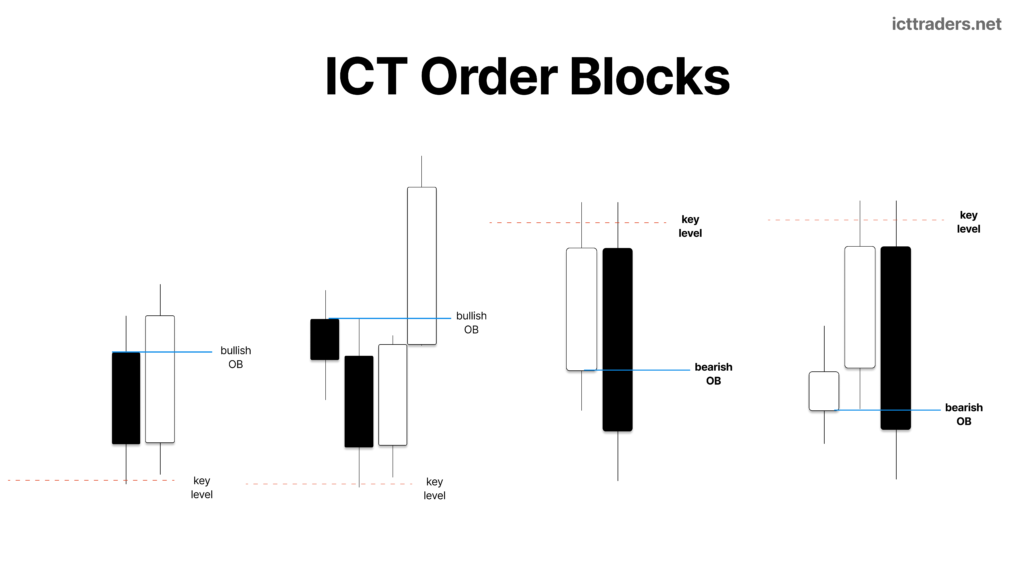
The ICT Order Block is another important concept introduced to new traders.
However, beginners frequently make the mistake of marking every bullish or bearish candle as an order block.
ICT does not teach this.
A bearish ICT Order Block may be identified as an up-close candle associated with a bearish price delivery.
A bullish ICT Order Block may be associated with a down-close candle before bullish price delivery.
But the candle alone is not enough.
There must be a storyline or market context supporting the setup.
For example:
Equal lows form → Sell-side liquidity is identified → Bearish price delivery is anticipated → Bearish Order Block is identified → Price retraces into the Order Block → Short entry is considered → Sell-side liquidity becomes the target
The liquidity objective gives the order block context.
Without understanding why price may move toward a particular target, traders may begin marking random candles as ICT Order Blocks.
Do Not Chase Price
New traders frequently identify a valid setup but hesitate to enter.
After price begins moving, fear changes into fear of missing out.
The trader then enters too late.
ICT teaches traders not to chase price when the expected price movement has already moved too close to the target.
Suppose you anticipate a liquidity pool below price.
If the market has already expanded significantly toward that liquidity, entering a short position may provide very little room for profit.
Instead, traders can study whether price retraces into a valid ICT Order Block or another contextual entry level.
The important question is:
Is enough profitable range still available between my anticipated entry and target?
The quality of an entry should be evaluated relative to the liquidity objective.
Measure the Available Price Range
Before taking a trade, identify:
Anticipated entry price
and
Anticipated liquidity target
Then measure the distance between these two levels.
For example:
Entry → Bearish Order Block
Target → Sell stops below equal lows
Available price movement → 27 pips
The trader can now determine whether the setup provides enough range for their objective.
This is much better than randomly entering because a candle looks bearish or bullish.
The beginner should know where they want to enter and what specific liquidity they expect price to seek.
Learn to Scale Profits
New traders commonly make trade management an all-or-nothing decision.
They hold the full position until the final target or until the stop loss is hit.
ICT introduces the benefit of scaling profits.
For example:
Initial position → 3 portions
First objective reached → Close part of the position
Price continues → Reduce additional exposure
Remaining position → Manage toward the extended objective
The advantage is that the trader can reduce risk while still participating in additional price movement.
Michael J. Huddleston explains:
“You never know if it’s gonna go down to your objective.”
This is an important trading reality.
Even when the context is correct, price is not obligated to reach the furthest projected target.
Taking partial profits can allow the trader to profit from the portion of the move that the market actually delivers.
Learn How to Make Money When the Full Idea Is Wrong
One of the most valuable concepts for a new trader is understanding that a trade does not need to reach the final target to be managed profitably.
Suppose your analysis anticipates a 20-pip liquidity raid.
Price moves 10 pips in your favor but later reverses.
If you scaled part of the position and reduced your original risk, the trade may still produce a profit.
The final target was not reached.
The full expectation was technically wrong.
Yet the trader still managed the position effectively.
Once risk has been taken, the goal should be to progressively reduce its impact when price delivers favorable movement.
This is very different from emotionally hoping that every trade reaches the maximum target.
What New Traders Should Focus On in ICT
A beginner does not need to master every ICT concept immediately.
Start with the fundamental process:
Study price action
↓
Mark equal highs and equal lows
↓
Identify potential buy-side and sell-side liquidity
↓
Observe liquidity raids and stop runs
↓
Understand where price may seek orders
↓
Practice on one or two markets
↓
Use a demo account
↓
Study Order Blocks within proper context
↓
Measure the range from entry to liquidity target
↓
Practice patience and disciplined execution
↓
Learn to scale profits and reduce risk
The objective is to gradually change the way you see price.
Instead of asking where an indicator says to buy or sell, begin asking:
Where is liquidity?
Where are traders likely positioned?
Where are their protective stops?
What liquidity pool could price seek next?
Final Thoughts
Understanding what new traders should focus on is important because the Forex market can easily overwhelm beginners with endless strategies and trading opportunities.
The ICT (Inner Circle Trader) approach taught by Michael J. Huddleston begins with a much simpler foundation: study price, understand liquidity, practice in a demo environment, and develop patience before attempting to trade live capital.
Start by watching equal highs and equal lows. Observe how price interacts with the liquidity resting above and below these levels. Study one or two markets and allow yourself enough time to recognize the repeated behavior.
The goal of a new trader should not be to trade every market movement.
The goal is to develop the ability to recognize high-probability price delivery, wait patiently, execute with a clear objective, and manage risk intelligently.
That foundation is far more valuable than collecting dozens of trading strategies.